A New Season for Mission Global
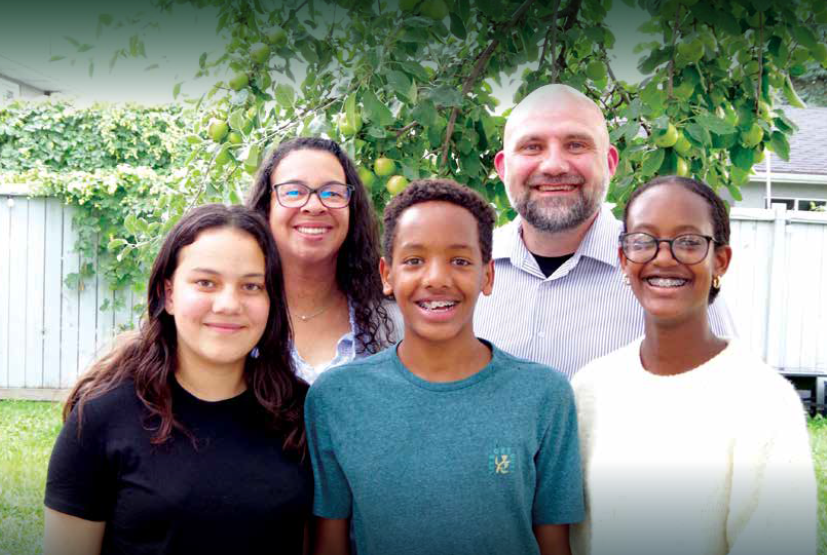
An Interview with Jeremy Feller
by Darcy McAlister and Ryan Hazzard
Rev. Jeremy Feller was elected executive director for Mission Global at General Conference 2026 in Halifax, N.S., in May. He was previously a PAOC global worker in Ethiopia and Mission Global’s regional director for Africa and the Middle East.
This interview was edited for clarity and length.
Can you introduce yourself and your family for those who are only just getting to know you?
I’m Jeremy Feller, married to Teresa, and we’ve been serving in Ethiopia for 23 years. We have three children. Timothy and Bethany are 13 years old, and Zoe is 12.
What are some highlights of your ministry?
The first highlight was when we saw a community engaged by a proximal people [group]. As they crossed to engage a neighbouring community of an Islamic background, we saw multiple churches planted—ultimately more than 40 churches—among this people group. The [number of] baptisms began to grow and grow as more and more people encountered the freedom, hope and love in Christ.
What was most exciting in my memory as a highlight was 3,755 people baptized in one baptism, the work of one local church starting to send out planters that grew into a movement, resulting in a large church planting movement.
In more recent times, one of the highlights has been the workers being sent out in dedication—many of them going with just one month of living and transportation support. Yet, what we see is an incredible harvest of churches being planted among unreached peoples, both in and outside the country. As they go, they face imprisonment and persecution, and the stories that come back have captivated our hearts as the kingdom of God continues to expand.
The release of workers into the harvest fields—particularly in these last few years as the numbers have grown into hundreds and then thousands—has been exceptional.
What was the focus of your doctoral dissertation and how will this help you in your new work?
In my doctoral work, I focused on spiritual formation—the title was “Spirit-filled Discipleship—Spiritual Formation for Pentecostal Leadership.” The core matter of discipleship is holistic in nature. For many, there are tendencies toward compartmentalization in the faith journey, and many people love boxes that allow us to think distinctly about things—theologically, spiritually or practically. My heart has been captivated by the holistic nature of discipleship that encompasses the entire person and shapes everything we do and who we are.
I find it exciting to find an evaluation process that really looks at the fruit of the Spirit. With some clarity, believers can help actively work in the messy aspects of spiritual growth by self- or peer evaluation with the fruit of the Spirit.
For me, the holistic nature of the disciple-making community is central to what will unfold in the next season. I think we need a season where we are very dedicated to being disciples and making disciples. It’s not our work; it is who we are called by God to be. And out of our being flows the making of more disciples.
What will some of your priorities be?
When we think about our priorities moving into the next season, I think two areas of focus—first, the least reached, and second, the most vulnerable—create a clear line for us for where we need to be going. The centrality of our calling, the north star of our calling as Mission Global, is to make disciples. Where do we do that? What makes something a priority? It’s when the people are the least reached or the most vulnerable. And we are probably at our best when it is both.
God is calling us to missional endeavours in places where society is most broken and the need of Christ is most stark. Moving into those areas will require, first, some spiritual maturity, discernment, commitment and calling, and second, some creativity, diligence and resilience to push through the variety of challenges these contexts will present to our workers.
How do you see our constituency continuing to align with those priorities?
When I look at the Canadian church—our PAOC family—I think of the next generation being discipled not just to be members in the pew, but to be participants in the mission of God. I see a church that is growing; our Canadian PAOC family is growing, and we are seeing an increase in effectiveness as people of the next generation are being discipled.
My heart’s cry is that they are not just members of a local community but active participants—actively engaged in missional disciple-making. We’re in a very good season with some amazing leaders bringing hope to communities across Canada where our churches exist, and with a sense of calling and purpose toward the places where our churches don’t yet exist or have been struggling on the edges of society.
What stands out to you about what is happening overseas?
When I get excited about what God is doing, I look at our Mission Global community right now and see real effectiveness. I get excited by those with an incredible vision and passion to expand the kingdom. I think of some of our work across Africa and the Middle East—some of our workers who have been initiating a mission-sending movement among the unreached. Their churches may not be huge or financially strong, but they’re saying: “We have this calling, and from our foundation, we’re not waiting until everything’s in order. We are going to be faithful stewards of the mission of God.” This is a key aspect that excites me.
How does praying, giving and going keep things moving forward?
I think the Canadian church has people, and we have resources. When I think of people, there are people of prayer, people of means, and people of movement.
Our people are people of prayer. Our people of prayer are intercessors, and we have a long history of praying and being led by the Spirit. That’s something we can do right now that will impact the global church—praying for these people groups, that God would lay it on our hearts to go to them.
The people of means are those God has called to be charitable for the expansion of the kingdom. It’s these people who Paul speaks of in Philippians 4: “I thank my God [every time I remember] you,” [1] and “I can do all things through Christ who strengthens me.” [2] That is the confidence Paul draws out.
And then there are [driven] people [of movement]. There are opportunities before us as a Fellowship of churches through Mission Global. These require us to take risks. We can’t do the safe things over and over again and try not to upset the apple cart. We are called to pursue the mission of God relentlessly.
What is one thing you’d like to invite Canadian leaders to do?
First, pray with us. Then allow us the opportunity to share where God is at work and what God is doing. We have a history of strong relationships globally, and that’s the captivating factor that excites me: we’ve been able to do this together. Allow us to do what we do well, and make our global impact more effective.
What biblical truths will shape your philosophy of missions?
First, it’s the issue of creation—that we are created in the image of God, every person with dignity and value. That means Christ died for every person. That foundational principle means we have a responsibility to care for the vulnerable, to bring the hope of Christ to the least reached, to be responsible stewards of God’s mission, and to be responsible stewards of God’s creation.
The second foundational truth is that Jesus is the hope of the world. This reality—which we see through 1 Peter—rings true regardless of circumstances. Among people where the church is not yet established, or where it is fledgling amid intense persecution, the words of 1 Peter ring out: we can have this hope because we are a royal priesthood, a chosen people. [3] We are those whom Jesus died for. That gives me excitement and hope amid tumultuous seasons.
And so, as we step into this philosophy of mission, our foundation is clear: first, everyone is created in the image of God; second, Jesus is the hope for the world.
Darcy McAlister is the director of communications and development for Mission Global. Ryan Hazzard is the communications lead.
1. Philippians 1:3.
2. Philippians 4:13, NKJV.
3. 1 Peter 2:9.
To subscribe to testimony/Enrich, click here.